

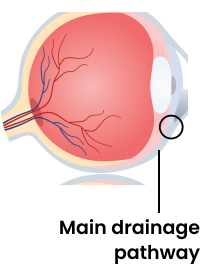
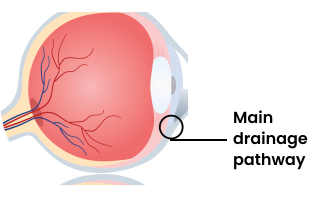

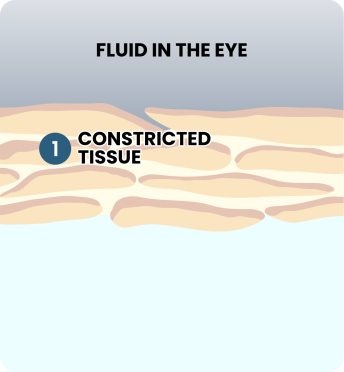
Constricted tissue reduces fluid drainage

VYZULTA with nitric oxide helps to open up constricted tissue

Tissue relaxes and opens up to reduce eye pressure so fluid in the eye can drain
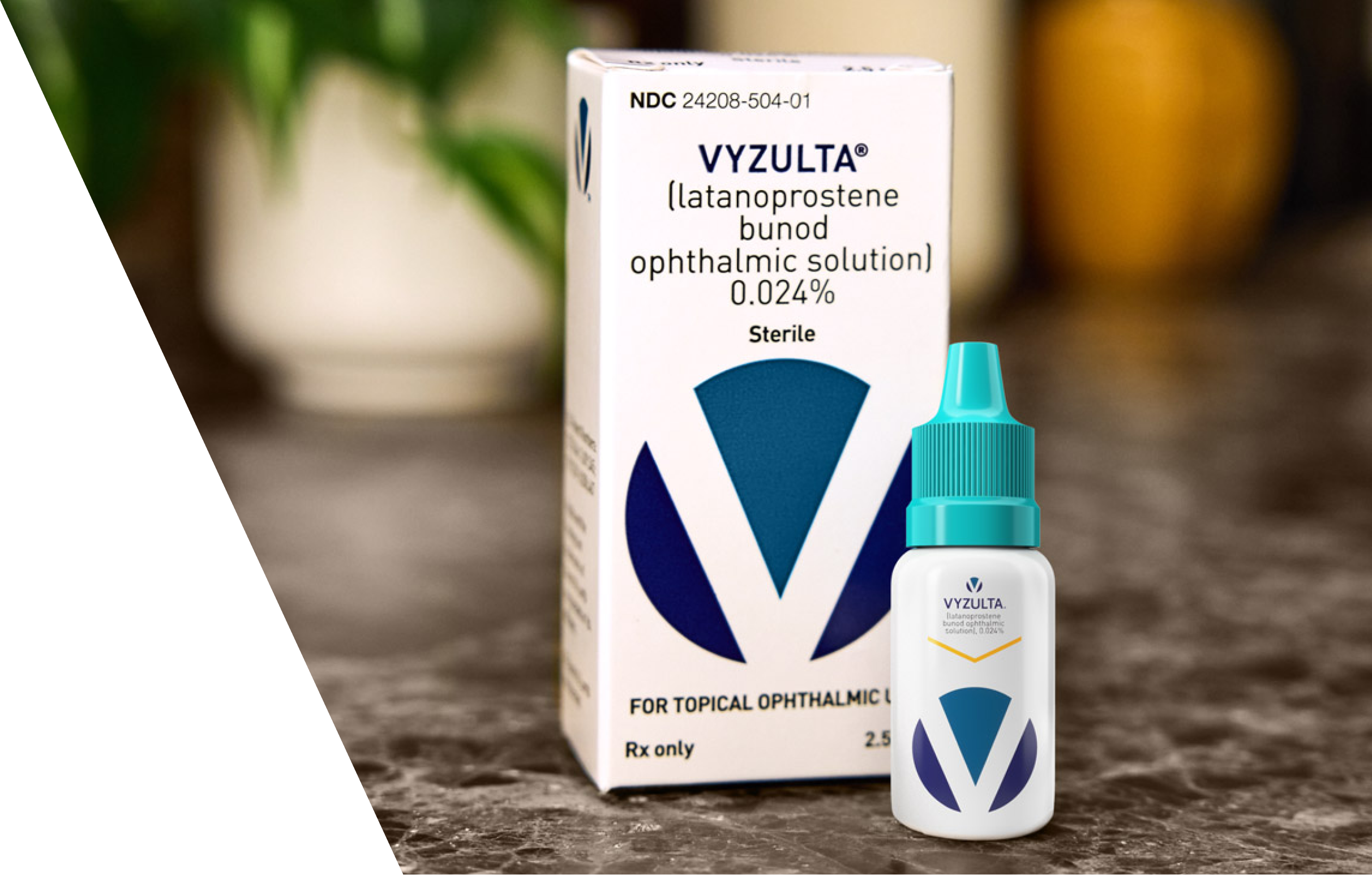
VYZULTA is a prescription eye drop that may help reduce eye pressure in people with open-angle glaucoma or ocular hypertension.
VYZULTA helps lower eye pressure by increasing drainage of fluid from the eye. It is believed to work through 2 different pathways in the eye. Lowering eye pressure can help reduce the risk of vision loss due to glaucoma.
VYZULTA is the only treatment that delivers both nitric oxide and latanoprost acid to help open up constricted tissue so fluid in the eye can drain from multiple pathways.
People with glaucoma have 40% fewer nitric oxide markers in their eyes compared to those without the condition, which is why nitric oxide may be important for managing glaucoma. It is believed that when your eye is lacking nitric oxide, the main pathway that allows the eye to drain becomes tense and constricted.
(Demonstrating only one part of the mechanism of action)
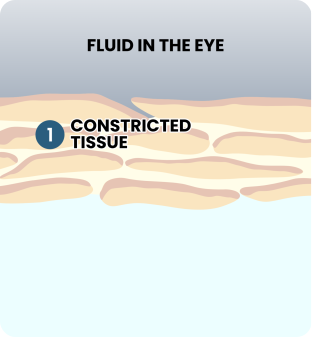
Constricted tissue reduces fluid drainage
VYZULTA with nitric oxide helps to open up constricted tissue
Tissue relaxes and opens up to reduce eye pressure so fluid in the eye can drain
Eligible* commercially insured patients may pay as little as a $25 COPAY FOR UP TO A 90-DAY SUPPLY For first Rx and eligible refills
START SAVING NOWThis treatment is available through a prescription from your doctor. Ask your doctor if VYZULTA is right for you.
There is no generic equivalent for VYZULTA. You have been prescribed VYZULTA because your doctor believes this treatment is appropriate for you. If you are asked by your pharmacist to substitute your VYZULTA prescription, you should contact your eye doctor.
The most common side effects seen in studies were eye redness, eye irritation, eye pain, and pain after putting the drops in your eye. These are not all of the possible side effects.
Brown color, or increased brown color, of the iris can occur, which may be permanent. Darkening of the eyelid skin may also occur, which is usually reversible after VYZULTA treatment is discontinued.
Gradual changes to eyelashes may occur, including increased length, thickness, color, number of eyelashes, and/or change in direction of eyelash growth. These changes may result in a difference in the appearance of each eye. These changes are usually reversible after VYZULTA treatment is discontinued.
Please see Important Safety Information below.
Call your doctor immediately if you:
VYZULTA works differently to help lower eye pressure.
Not an actual patient.


Sign up to receive VYZULTA tips, savings, and more
Not an actual patient.
VYZULTA® (latanoprostene bunod ophthalmic solution), 0.024%, is used to lower intraocular (eye) pressure in patients with open-angle glaucoma or ocular hypertension.
You are encouraged to report negative side effects of prescription drugs to the FDA. Visit www.fda.gov/medwatch or call 1-800-FDA-1088.
Please click here to see full Prescribing Information.

VYZULTA® (latanoprostene bunod ophthalmic solution), 0.024%, is used to lower intraocular (eye) pressure in patients with open-angle glaucoma or ocular hypertension.

